If you’ve ever stood in the fiber supplement aisle comparing labels, you’ve probably wondered: what’s the difference between psyllium husk and Metamucil? The short answer is that Metamucil’s active ingredient is psyllium husk. But the full picture is more nuanced. Not all psyllium products are created equal, and the additives, form, and dosage can make a meaningful difference for your digestion, budget, and health goals. This guide compares psyllium husk and Metamucil head to head so you can pick the right option for your needs.
What Is Psyllium Husk?
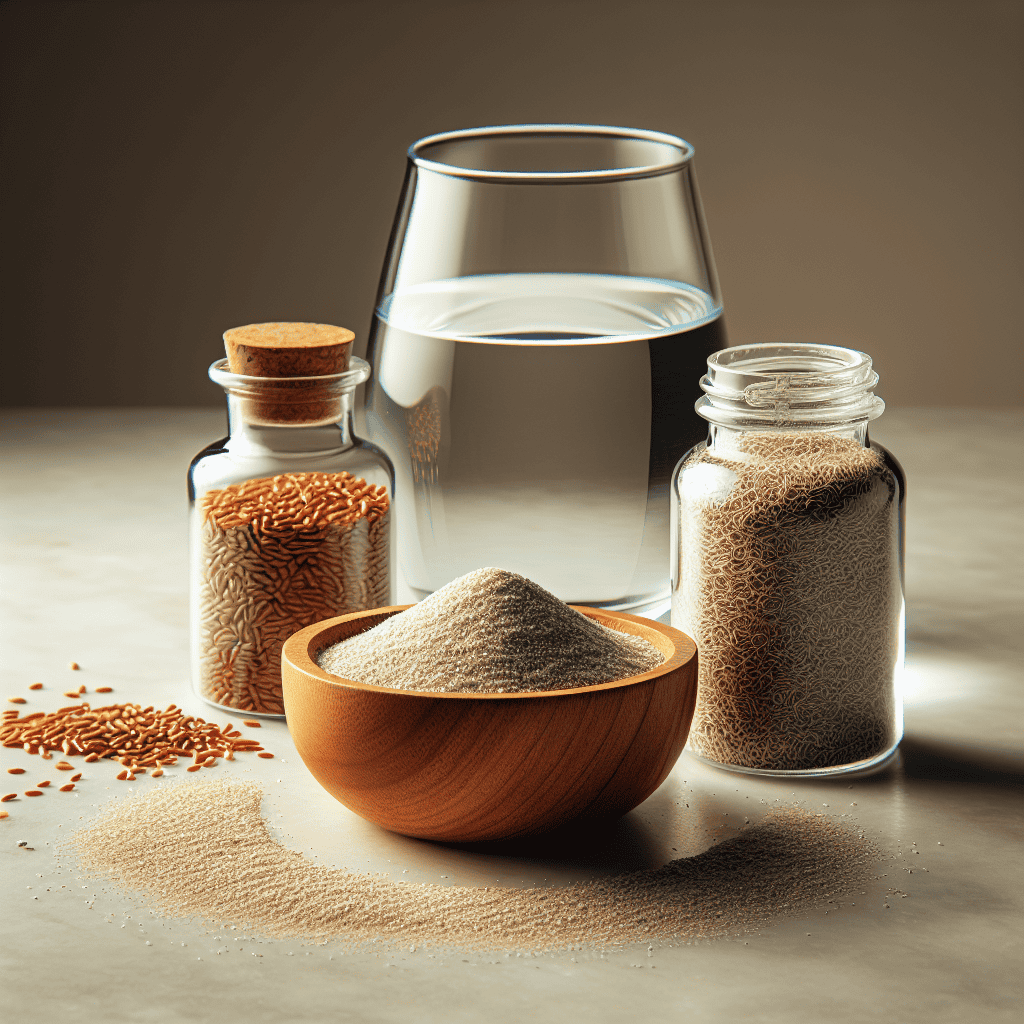
Psyllium husk is the outer shell of seeds from the Plantago ovata plant, which is native to India and is also grown in other parts of South Asia. When mixed with water, psyllium husk absorbs liquid and expands into a thick, gel-like substance. This gel adds bulk to stool, softens it, and helps it pass through the colon more easily.
Psyllium is classified as a soluble fiber, though it behaves somewhat differently from other soluble fibers. While most soluble fibers are rapidly fermented by gut bacteria (which can cause gas), psyllium is only partially fermented. This makes it one of the most well-tolerated fiber supplements available, producing less gas and bloating than alternatives like inulin or wheat dextrin.
Pure psyllium husk powder is available as a generic supplement from many manufacturers. It typically contains one ingredient: psyllium husk. No sugar, no sweeteners, no flavoring, no coloring.
What Is Metamucil?
Metamucil is a brand-name fiber supplement made by Procter & Gamble. It has been on the market since 1934, making it one of the oldest and most recognized fiber supplement brands. Its primary active ingredient is psyllium husk fiber, specifically listed as “psyllium husk” or “psyllium fiber” depending on the product line.
Where Metamucil differs from generic psyllium is in its additional ingredients. Depending on the product version, Metamucil may contain:
- Sucrose (sugar) in the original version: about 2 grams per serving
- Aspartame in the sugar-free orange flavor
- Stevia in newer “natural” formulations
- Citric acid and natural/artificial flavors (orange, berry, unflavored)
- Yellow 6 and other food dyes in flavored versions
- Maltodextrin as a flow agent in some formulations
Metamucil also comes in capsule, powder, and gummy forms. The gummies use a different fiber source (soluble corn fiber and inulin) and are not psyllium-based, so they work differently.
Head-to-Head Comparison
| Feature | Pure Psyllium Husk | Metamucil (Powder) |
|---|---|---|
| Active ingredient | Psyllium husk | Psyllium husk |
| Fiber per serving | 5-7g (1 tbsp) | 3.4g (1 rounded tbsp) |
| Additives | None | Sugar or sweetener, flavor, color |
| Sugar | 0g | 0-2g depending on version |
| Taste | Mild, slightly earthy | Orange, berry, or unflavored |
| Texture | Thick, gritty | Smoother (finer grind) |
| Cost (approx.) | $0.10-0.15 per serving | $0.30-0.50 per serving |
| Organic options | Widely available | Not available |
| Forms available | Powder, whole husks | Powder, capsules, gummies |
Effectiveness: Are They Equally Good?
Since both products use psyllium husk as the active ingredient, their core effectiveness for constipation relief, cholesterol lowering, and blood sugar management is essentially identical. The clinical research behind psyllium (and there’s a lot of it) applies equally to both.
Where differences emerge is in dosing. A tablespoon of pure psyllium husk powder typically delivers 5 to 7 grams of fiber, while a serving of Metamucil powder provides about 3.4 grams. This means you may need to take more Metamucil to match the fiber content of a single serving of pure psyllium.
According to a meta-analysis published in the European Journal of Clinical Nutrition, a daily intake of 7 to 10 grams of psyllium is needed for meaningful cholesterol reduction. That’s roughly 2 servings of pure psyllium or about 3 servings of Metamucil powder per day.
For constipation relief specifically, the recommended psyllium dose is 5 to 10 grams daily, taken with at least 8 ounces of water per dose. Both products achieve this effectively. Read more about fiber’s role in constipation in our article on high-fiber foods for constipation relief.
When to Choose Pure Psyllium Husk
Pure psyllium husk is the better choice if:
- You want to avoid additives. Pure psyllium contains one ingredient. No artificial sweeteners, food dyes, or flavoring agents. If you’re following a clean-eating or elimination diet, pure psyllium keeps things simple.
- You’re watching your budget. Generic psyllium husk costs roughly a third as much as Metamucil per serving. Over a year of daily use, the savings add up to $50 to $100.
- You want higher fiber per serving. Each tablespoon of pure psyllium delivers nearly twice the fiber of a Metamucil serving, so you get more benefit with fewer scoops.
- You prefer organic options. Several brands offer USDA organic psyllium husk. Metamucil doesn’t have an organic line.
- You dislike sweet-flavored supplements. Pure psyllium has a mild, neutral taste that blends into smoothies and baked goods without altering the flavor.
When to Choose Metamucil
Metamucil may be the better option if:
- Taste matters to you. The orange and berry flavors make Metamucil easier to drink for people who dislike the texture of plain psyllium. This is a real consideration because the best supplement is the one you’ll actually take consistently.
- You want a smoother texture. Metamucil’s powder is ground more finely and dissolves more smoothly than many generic psyllium products. The difference in grittiness is noticeable.
- You prefer capsules. Metamucil capsules let you skip the mixing-with-water step entirely. Each capsule contains about 0.5 grams of fiber, so you’ll need 6 to 10 capsules per dose, but some people strongly prefer this to drinking a thick gel.
- Brand trust matters. Metamucil has been around for 90+ years and is the fiber supplement most recommended by doctors. The consistent quality control of a P&G product provides peace of mind for some users.
Other Fiber Supplements Worth Considering
Psyllium isn’t the only fiber supplement out there. Here’s how the main alternatives compare:
Methylcellulose (Citrucel): A synthetic, non-fermentable fiber that causes virtually no gas or bloating. It doesn’t have the cholesterol-lowering benefits of psyllium, but for people with very sensitive digestive systems or IBS, it can be a better choice. For more on when bloating is a concern, see our guide on fiber and bloating.
Wheat dextrin (Benefiber): Dissolves completely in water with no texture change, making it almost undetectable in drinks and food. However, it provides only soluble fiber and may be less effective for constipation than psyllium.
Inulin (chicory root fiber): A prebiotic fiber that specifically feeds beneficial gut bacteria. Great for microbiome support, but it’s highly fermentable and can cause significant gas in some people.
Acacia fiber: A gentle, slowly fermented fiber that many IBS patients tolerate well. It dissolves easily and has a mild prebiotic effect.
For a complete breakdown of all supplement types, read our comprehensive fiber supplements guide.
How to Take Psyllium Husk Safely
Regardless of which product you choose, these rules apply to all psyllium supplements:
- Always take with at least 8 ounces (240 ml) of water. Psyllium absorbs water rapidly. Taking it with too little liquid can cause choking or esophageal blockage. This is not a minor warning: always use a full glass of water.
- Start with half a dose. Begin with half the recommended serving for the first week, then increase to the full dose. This reduces bloating and gas during the adjustment period.
- Take it 30 minutes before or 2 hours after medications. Psyllium can reduce the absorption of some medications, including lithium, digoxin, and certain antidepressants. Space out your doses.
- Don’t take it right before bed. The bulk-forming effect works best when you’re upright and active. Take your last dose at least an hour before lying down.
- Drink water throughout the day. Your total fluid intake should increase when supplementing with psyllium. Aim for an extra 2 to 3 glasses of water per day beyond your normal intake.
For context on how much total fiber you should target daily (from both food and supplements), see how much fiber you need per day.
Frequently Asked Questions
Is Metamucil just psyllium husk?
The active ingredient in Metamucil powder and capsules is psyllium husk, yes. However, Metamucil also contains additional ingredients like sweeteners (sugar, aspartame, or stevia), flavoring, citric acid, and sometimes food coloring. The gummy version uses a completely different fiber source (soluble corn fiber and inulin), not psyllium.
Is generic psyllium as good as Metamucil?
For fiber effectiveness, yes. Both contain the same active ingredient, and generic psyllium actually delivers more fiber per serving in most cases. The main advantages of Metamucil are taste, texture, and convenience (capsule form). From a health perspective, generic psyllium is equally effective.
Can psyllium husk help you lose weight?
Psyllium can support weight management by increasing feelings of fullness and slowing gastric emptying. A study published in Appetite found that 6.8g of psyllium before meals reduced hunger and caloric intake. However, psyllium alone is not a weight loss solution. It works best as part of an overall healthy diet and active lifestyle.
Is it safe to take psyllium every day?
Yes. Daily psyllium use is well-supported by research and is recommended by organizations like the FDA, which allows psyllium products to carry a heart health claim. Long-term daily use is safe for most adults when taken with adequate water. Consult your doctor if you have a bowel obstruction, difficulty swallowing, or are on medications that may interact.
What is the best time of day to take psyllium?
Most people find that taking psyllium 30 minutes before breakfast works best for regularity. A second dose before dinner can help if you need more fiber. Avoid taking it immediately before bed, and always space it at least 2 hours from any medications to prevent absorption interference.